Delhi CM Unveils Comprehensive Action Plan to Curb Air Pollution in 4 Years
After heading a high-level meeting, Gupta laid out an action plan involving multiple departments and directed officials to work in a "clear, measurable and result-oriented" way.
CPF POLICY WATCH
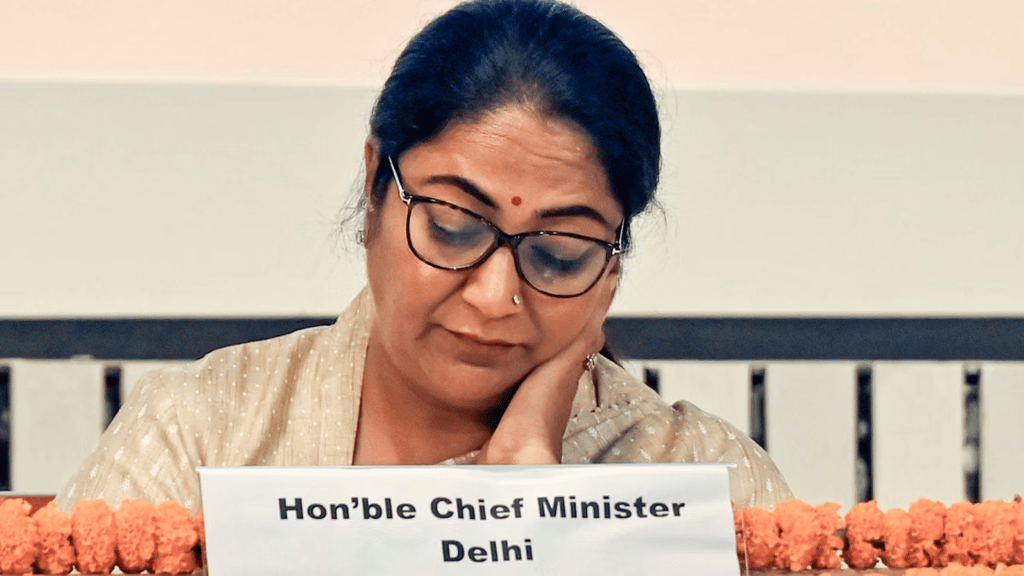
Delhi’s chronic air pollution – especially dangerous PM2.5 particulate matter – has long endangered public health. In January 2026, Chief Minister Rekha Gupta announced a four-year, “clear, measurable and result-oriented” plan to substantially reduce PM2.5 levels. The plan is comprehensive, coordinating multiple departments with strong budget support. It builds on recent gains (Delhi’s average AQI fell to its lowest since 2018) and targets year-round pollution sources. Below we summarize the plan’s key components and argue that, with diligent implementation, the measures are viable and will likely yield significant air quality improvements.
Public transport expansion. The cornerstone is a massive boost to transit. Delhi will increase its total bus fleet from about 5,000 today to 6,000 by 2026 and 14,000 by 2029, including 500 new shorter buses for last-mile routes. These EV buses (and similar expansion of metro feeder buses, e-autos, bike-taxis and feeder cabs) will be seamlessly integrated with the Metro network to ensure deep connectivity. The Metro itself is being expanded by over 200 km (Phases IV & V) – nearly doubling daily ridership. As public transit use grows, private vehicle use and per-capita emissions will decline. (Electric buses also directly cut tailpipe emissions: they “reduce air pollution, cutting urban emissions” by eliminating soot and greenhouse gases.)
Traffic management and decongestion. Delhi identified 62 major congestion hotspots, and has already begun improvement works at half of them. The government has deployed 1,200 additional DTC personnel to assist traffic police at these sites, reducing idle engines in jams. Large-scale parking reforms – including new multi-level lots and “smart pricing” fees – will discourage needless private-car use in crowded areas. Such congestion-pricing and parking strategies have been effective elsewhere: for example, London’s congestion charge cut particulate pollution by ~15% in its first year. Delhi’s parking plan is similarly poised to shift commuters to buses, metros and car-pools, cutting emissions and easing traffic.
Road improvement and dust control. Unpaved roads and open dust are estimated to contribute ~38% of Delhi’s PM2.5 in summer. To combat this, Delhi has approved Rs 6,000 crore for reconstructing/upgrading ~3,300 km of roads (paving shoulders and central dividers, laying utility ducts to avoid rework). Simultaneously, the plan calls for 70 new mechanized road-sweeping machines on narrow roads and 250 water-sprinkler/anti-dust machines citywide. These high-capacity sweepers and sprinklers – already proven in Delhi (over 300 sprinklers and tankers now wet down >2,200 km/day) – will significantly cut airborne road dust. Since nearly half of PM2.5 in the dry season comes from dust, these measures are well-targeted and cost-effective.
Electric vehicles and infrastructure. Delhi’s new EV policy targets its 5.8 million two-wheelers (largest vehicle category) with subsidies and scrappage incentives. The plan will quadruple public EV charging/battery-swap points from 9,000 to 36,000, easing range anxiety. Interest subsidies and national schemes will encourage electric trucks and autos. By making EVs more affordable and practical, fuel emissions will plummet. Importantly, the transit expansions above also focus on electric buses and feeder vehicles, multiplying the clean-air impact.
Green cover expansion. Trees help filter particulates from the air. To that end, Delhi will plant 3.5 million trees in the Ridge area over four years, including 1.4 million in the first year. (It will also develop 365 acres of “brown parks” on vacant land.) Urban forestry yields real health benefits: studies in U.S. cities show trees remove fine particulates and can save lives. Increasing Delhi’s green belt will complement other measures by trapping dust and improving overall air quality.
Waste and industrial pollution control. The plan sets strict deadlines to clear old landfill sites (e.g. Okhla by mid-2026, Bhalswa by Oct 2026, Ghazipur by Dec 2027), and allocates capital (Rs 500 crore now + Rs 300 crore annually) to municipal solid-waste management. This will reduce the frequent smog from trash fires. In industry, over 1,000 polluting units have already been sealed this winter, and large plants are being mandated to install real-time emission monitors. This zero-tolerance approach – backed by monitoring and enforcement – tackles flaring and fugitive emissions.
Feasibility and Data Trends
Budget and implementation: The government has committed major funding (Rs 6,000 cr for roads; Rs 2,300 cr for extra sweepers; Rs 2,000 cr for water guns; plus the metro and bus projects). These are large numbers, but commensurate with Delhi’s scale and the public health stakes. Already, many initiatives are underway or tendered (e.g. road works to begin within two months and finish in a year). The state’s clear timelines (e.g. sewage clearances, waste deadlines ) show serious intent. Multiple departments (transport, environment, PWD, MCD, etc.) are coordinated under CM Gupta’s review.
Recent trends: Notably, Delhi’s average air quality has begun to improve even before this plan. According to data, the 2025 average AQI (139) is the lowest since 2018. This suggests that sustained measures work – recent CPCB/CAQM actions (like stricter construction dust control) have already lowered PM2.5. The new plan builds on this momentum by widening the scope to include transit, green cover, and dust more aggressively. The long-standing wintersmoke (stubble-burning haze) remains a challenge, but the plan’s city-based measures will mitigate local sources. International perspective: Delhi’s approach matches global best practices. Integrated planning, with hard targets and citizen engagement, is key to any city’s air quality success. For example, London and Stockholm combined congestion pricing with transit investment and saw large pollution drops. Likewise, cities converting diesel buses to electric report clear health benefits. Delhi’s plan – covering vehicles, roads, trees, and waste – is equally holistic. By following through, Delhi can join cities worldwide in showing that coordinated policy yields breathable air.
International perspective: Delhi’s approach matches global best practices. Integrated planning, with hard targets and citizen engagement, is key to any city’s air quality success. For example, London and Stockholm combined congestion pricing with transit investment and saw large pollution drops. Likewise, cities converting diesel buses to electric report clear health benefits. Delhi’s plan – covering vehicles, roads, trees, and waste – is equally holistic. By following through, Delhi can join cities worldwide in showing that coordinated policy yields breathable air.
Conclusion
Delhi’s government has crafted a comprehensive and well-funded plan that directly addresses the city’s pollution sources. By setting quantifiable targets and rolling out proven measures – electric buses, metro expansion, strict traffic control, road cleaning, greening and monitoring – the plan is feasible and promising. Its layered strategy mirrors global successes (e.g. cleaner transit and congestion management) and builds on recent improvements in Delhi’s air. With full implementation and public cooperation, this four-year action plan can genuinely deliver cleaner air to Delhi’s residents, fulfilling the government’s commitment to a healthier city.