
Delhi Moves to Expand Food Security as Over 11 Lakh Residents Await Ration Cards
The policy, 'Delhi Food Security Rules, 2025', which aims at setting up a fair and legally compliant framework for the Public Distribution System (PDS).
OPINION
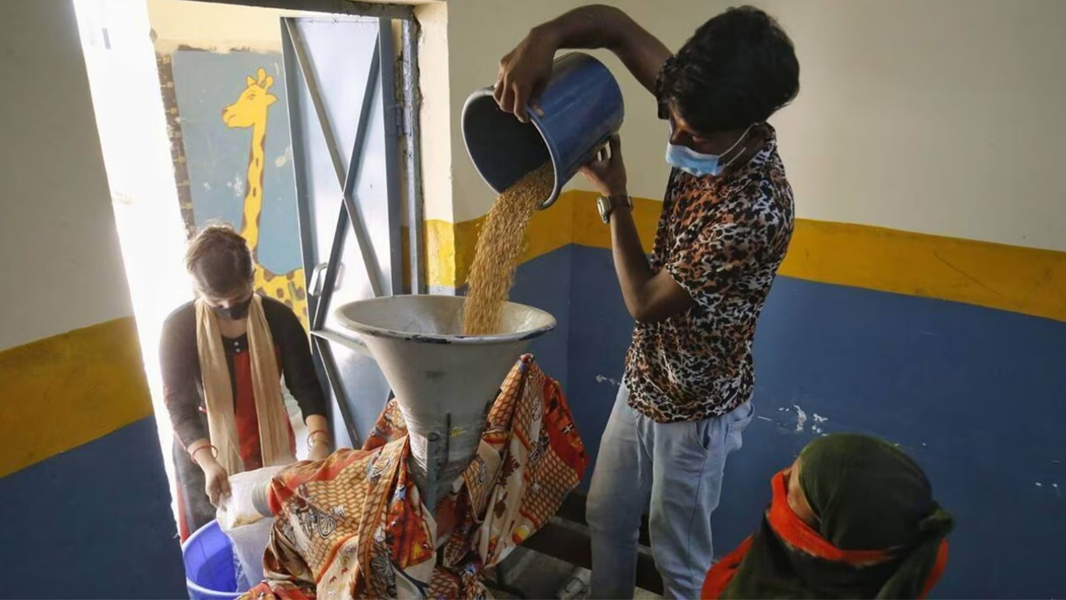
Food Security in Delhi Needs Rules, Not Rhetoric
Delhi runs on promises. Every election season places food security at the centre of political language, yet millions of residents still wait outside the ration system. The Delhi Cabinet’s decision to notify the Delhi Food Security Rules, 2025 signals an important shift—from ad-hoc welfare delivery to a rule-based framework. This move deserves attention not because it announces generosity, but because it attempts administrative honesty.
For over a decade, Delhi’s Public Distribution System limps under contradictions. The law guarantees subsidised food, but the system freezes beneficiary numbers. Applicants submit forms year after year, while officials cite the absence of clear rules. The result looks absurd, a welfare capital with more than 11.65 lakh people on a waiting list and no legal pathway to absorb them. The new rules try to break this deadlock.
At the heart of the reform lies a simple idea: food security needs governance, not improvisation. The policy introduces income certification, district-wise quotas, and prioritisation based on vulnerability. These changes do not sound revolutionary, yet Delhi never applied them with consistency. Welfare without criteria breeds chaos. Welfare with criteria invites scrutiny, but it also creates fairness.
The insistence on income certificates from the revenue department marks a critical departure from self-declaration. Self-certification suits emergency relief, not long-term entitlements. A ration card opens access not only to subsidised food but also to identity and residence proof. Without verification, the system invites leakage and resentment. With verification, the state gains legitimacy. The new rules choose legitimacy.
Critics argue that documentation hurts the poorest. This concern carries weight, but it does not justify an opaque system. The solution lies in administrative support, not dilution of standards. Revenue offices must assist applicants, camps must reach informal settlements, and digital platforms must reduce friction. Governance fails not when it asks questions, but when it refuses to help citizens answer them.
The shift from first-come-first-served to need-based prioritisation also matters. Time does not measure hunger; vulnerability does. A daily wage worker who loses employment cannot wait behind someone who applied earlier but now earns more. District-level committees now assess applications on economic distress, family size, and income status. This approach aligns food security with lived reality rather than bureaucratic timestamps.
Yet discretion brings risk. Committees must operate with transparency, written criteria, and public disclosure. Without safeguards, prioritisation can slip into favouritism. The rules mention grievance redressal panels at multiple levels. This mechanism must function as a right, not a courtesy. Appeals must carry timelines. Decisions must carry reasons. Welfare loses moral force when citizens beg for entitlements.
The policy also introduces periodic verification of existing beneficiaries. This step triggers political discomfort, but it remains unavoidable. Cities change fast. Incomes rise, families relocate, and households fragment. A static list in a dynamic city makes little sense. Regular verification frees space for new applicants and restores credibility to the system. The state owes honesty both to taxpayers and to the poor.
The decision to raise the income ceiling for eligibility expands coverage in a city with high living costs. Rent, transport, and food prices stretch household budgets far beyond rural benchmarks. Urban poverty hides behind employment, yet insecurity persists. The revised threshold recognises this reality. Still, income alone cannot define vulnerability. Future revisions must consider disability, illness, and old age with greater nuance.
Politically, the rules place responsibility squarely on administration rather than symbolism. Food security no longer survives as an announcement; it now requires execution. Once the Lieutenant Governor, V K Saxena, accords approval, the state can no longer hide behind procedural absence. The rules create obligation, and obligation invites accountability.
For the Delhi Government, this moment offers both opportunity and risk. Effective rollout can restore trust among excluded households. Poor execution can deepen cynicism. The difference lies in capacity—trained staff, data integrity, and political will to resist shortcuts.
Food security remains more than a welfare scheme. It reflects how the state values dignity. A ration card spares families from choosing between hunger and debt. It also anchors migrants and informal workers in the civic fabric of the city. Delhi’s new rules acknowledge this truth, even if imperfectly.
An op-ed should ask a harder question: will rules change outcomes? The answer depends less on policy text and more on administrative courage. If officials treat verification as harassment, the reform will fail. If they treat it as service, the reform will endure. Delhi now stands at that crossroads.
The city does not need louder promises. It needs quieter systems that work. The Food Security Rules, 2025 offer that possibility. Delhi must now prove that governance can reach the ration shop, not just the press conference.