
From Nari Shakti to Nation Shakti: Why Women’s Representation Cannot Wait
From nari shakti to nation shakti is not a slogan; it is a roadmap. It asks us to recognise that the power of Indian women has always fuelled the progress of Indian society, and that our institutions must now fully reflect this reality. The path ahead is clear: act with conviction, act with consensus, and act with a sense of duty that looks beyond the next election cycle.
OPINION
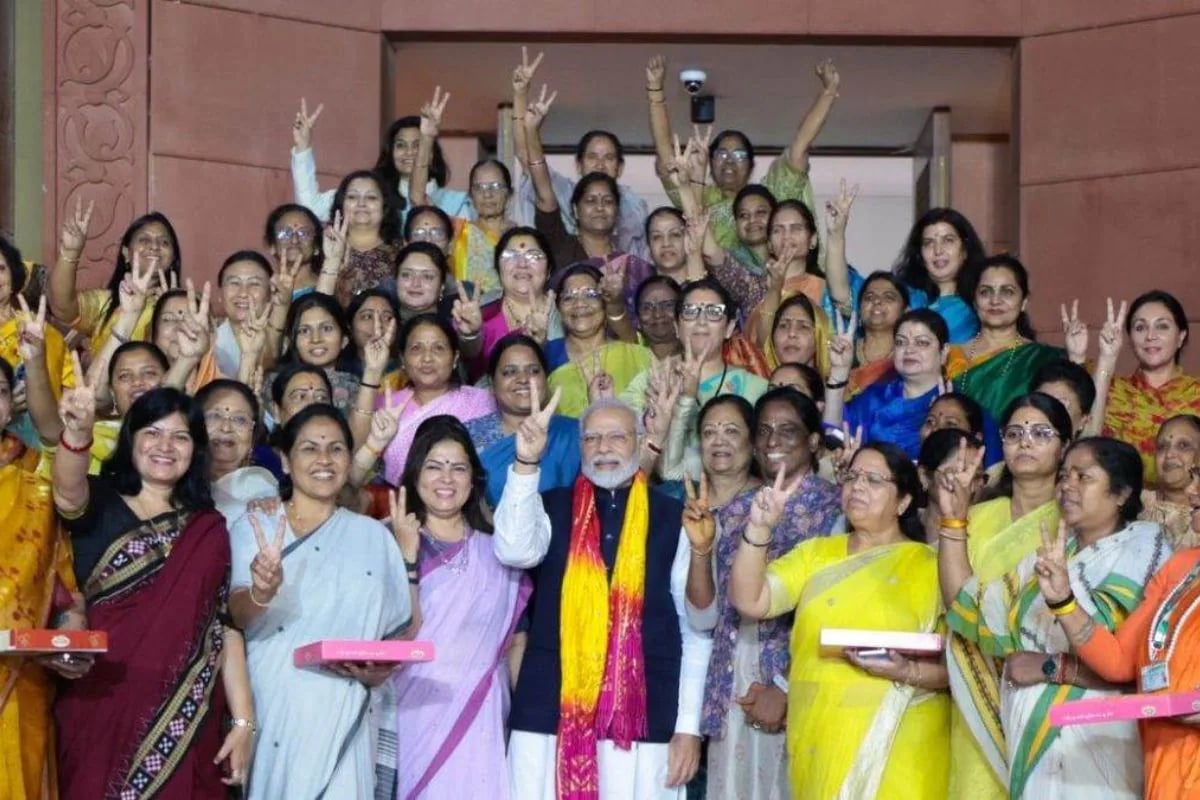
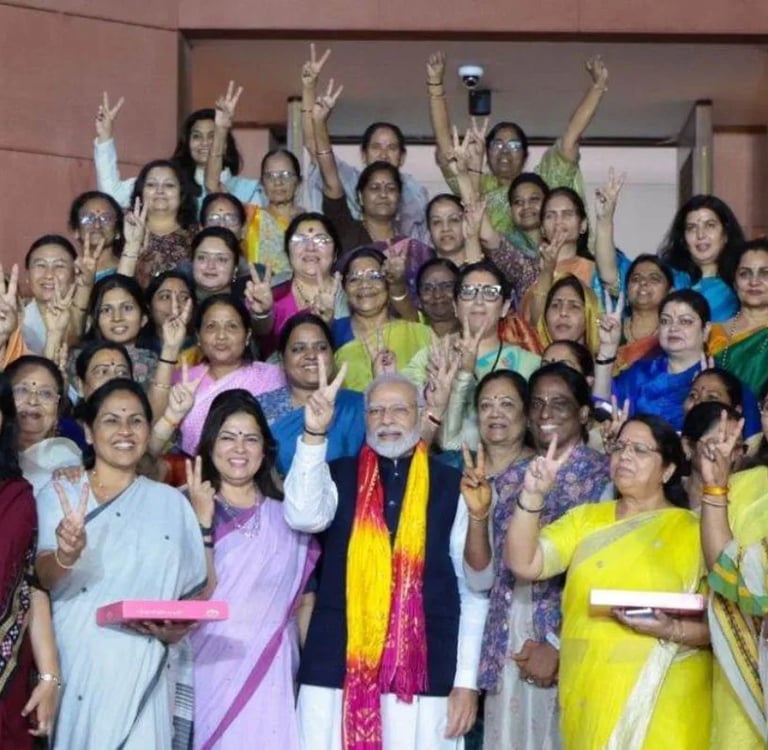
India has never been afraid of reinvention. Each generation has added its own chapter to the long story of our democracy, expanding rights, confronting inequalities, and deepening the meaning of justice. Today, we stand at another such turning point. The question before us is no longer whether women deserve a greater voice in our legislative institutions. That debate is settled. The real question is whether we, as a nation, will act with the urgency and unity that this moment demands.
This season, the country is immersed in cultural and moral reflection marking festivals across regions and remembering reformers like Mahatma Phule and Dr B.R. Ambedkar, who tied social justice to democratic progress. These occasions are not mere rituals. They compel us to examine whether our institutions live up to the ideals we so readily celebrate in speeches and ceremonies. On the question of women’s representation, the answer is uncomfortable: our democracy remains incomplete.
From classrooms to corporate boardrooms, from start-up hubs to defence services, women are reshaping India’s story. Their achievements in science, entrepreneurship, governance, arts, and public service have shown that they are not spectators at the margins, but architects of modern India. Yet in Parliament and state legislatures the very arenas where the rules of our collective future are written their numbers remain starkly low. The gap between women’s contribution and their presence in decision-making is not just a gender imbalance; it is a democratic deficit.
The proposed framework for women’s reservation in legislatures offers a historic opportunity to correct this long-recognised distortion. But law, by itself, does not transform societies. Transformation comes from political will, sustained commitment, and the courage to put national interest above partisan calculations. If this moment is reduced to a contest over credit, headlines, or electoral optics, we will have missed the essence of what is at stake. This is not about any single party’s victory; it is about the Republic’s moral strength.
Women bring to governance perspectives shaped by lived realities—of families balancing survival and aspiration, of communities negotiating access to public services, and of social systems that still carry deep hierarchies. When women sit at the decision-making table, priorities tend to shift: health and nutrition are no longer afterthoughts, education is not treated as expendable, and social protection is seen not as a burden, but as investment in human capability. Policy becomes less about abstract growth and more about people’s everyday dignity.
Evidence from local governance already shows this. Wherever women have been meaningfully included in panchayats and urban local bodies, we see greater focus on basic services, better responsiveness to community needs, and more sustained attention to issues such as water, sanitation, safety, and education. Their leadership does not diminish others; it expands the horizon of what governance can achieve. Legislative representation is simply the next logical step in a journey India has already begun.
Delaying this transition means perpetuating an inequity that we have openly acknowledged for decades. Committees have recommended change, manifestos have promised it, and debates in Parliament have recognised its necessity. What has been missing is not consensus in principle, but resolve in practice. In an era when India speaks with confidence on the global stage on economic growth, digital innovation, and civilizational values it would be a deep contradiction if our own institutions continued to mirror outdated power structures at home.
This is, above all, a generational responsibility. The choices we make now will define the political landscape that our daughters and sons inherit. Will they see a democracy that had the courage to become more representative when the opportunity arose? Or will they inherit a system that flinched at the threshold of change, despite overwhelming evidence and public sentiment in its favour? History does not look kindly on societies that recognised injustice, but postponed its remedy.
Framing this as a “women’s issue” alone is a mistake. When women rise in representation, it is the nation that rises in strength. A democracy that draws on the full potential of its people across gender, caste, class, religion, and region—builds resilience that no external challenge can easily shake. Inclusive institutions are not just a moral aspiration; they are a strategic advantage in an uncertain world. They make policy more stable, growth more balanced, and social peace more durable.
For this reason, the coming months require a spirit of statesmanship that rises above routine politics. Parties will continue to compete, ideologies will continue to differ, but on the question of women’s equal place in our highest institutions, there is room only for one common position. The message from Parliament to every girl in India must be unambiguous: your voice belongs here, your leadership is not an exception to be celebrated once in a while, but a norm this Republic is committed to uphold.
India has, time and again, shown that when the moment for transformative change arrives, it is capable of bold decisions from dismantling structural injustices to reimagining its economic and social order. Women’s representation is one such moment. It is not about adjusting numerical quotas; it is about reshaping the character of our democracy so that it truly reflects the society it claims to serve.
From nari shakti to nation shakti is not a slogan; it is a roadmap. It asks us to recognise that the power of Indian women has always fuelled the progress of Indian society, and that our institutions must now fully reflect this reality. The path ahead is clear: act with conviction, act with consensus, and act with a sense of duty that looks beyond the next election cycle.
The time to do so is not tomorrow, not later, but now.