Placing Women at the Centre of India’s Growth Story
Union Budget for FY2026–27 lays groundwork that goes beyond mere numbers. It creates conditions for women to participate more fully in India’s economic and social life while signalling a policy intent that aligns inclusion with growth.
UNION BUDGET (2026-27)OPINION
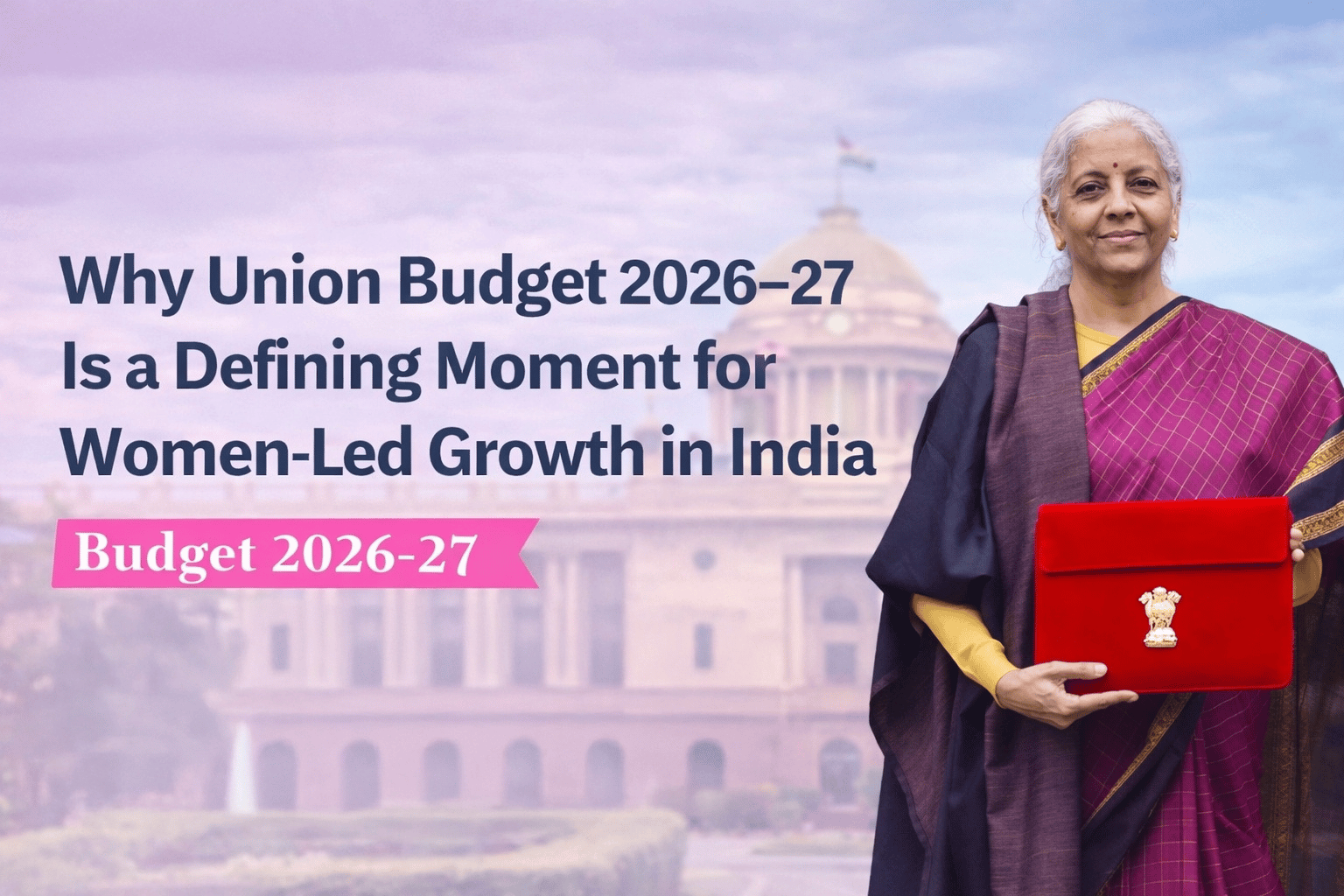
India’s Union Budget for FY2026–27 represents a moment of transition. It does not simply allocate funds for growth and infrastructure but also reframes development through an inclusive lens that places women and children at the center of national progress. With expanded resources, new institutional priorities, and targeted interventions across sectors, the Budget charts a pathway that acknowledges women as active agents of economic and social change rather than passive recipients of welfare support.
At the outset, the Gender Budget stands out as a clear signal of this shift. The share of the Gender Budget in total Union expenditure rises to 9.37% from 8.86% last year, reflecting deeper commitment to gender-responsive governance. Allocation for women and girls climbs to ₹5.00 lakh crore, marking an increase of more than 11% over the previous year. These figures show a government that commits not just to rhetoric but to financial backing that can deliver tangible change in women’s lives across India’s diverse regions.
This Budget roots its gender priorities in a broader vision of development — the Viksit Bharat narrative — where women and children take center stage as drivers of growth, care, learning, and enterprise. Instead of treating care work as a by-product of economic activity, the Budget acknowledges care as both a social necessity and an engine for employment. Training 1.5 lakh multi-skilled caregivers in child, elderly, and allied care services creates pathways for livelihoods while building a robust ecosystem that supports families and communities. By focusing on care, policymakers recognise the work that women perform daily while opening new opportunities for dignified employment in sectors dominated by women.
In health, the expansion of Allied Health Professional (AHP) education stands out. Through strengthening educational institutions and adding new ones across both public and private sectors, the Budget plans to produce 1 lakh allied health professionals over the next five years. This investment reaches beyond general workforce growth by expanding women’s participation in the health sector, a field in which women comprise a substantial share of graduates and practitioners. These changes can improve service delivery in both urban and rural India while creating career pathways in disciplines like optometry, radiology, and behavioural health.
Another area where the Budget promises structural impact is women’s economic participation. The new Self-Help Entrepreneur (SHE) Marts offer an institutional platform for women-led Self-Help Groups (SHGs) to engage with markets, build supply chains, and grow incomes. Community-owned retail outlets in cluster-level federations can help women leap from subsistence production to sustained enterprise, with better access to buyers and branding. By integrating SHGs into sectors such as fisheries and coastal livelihoods, policymakers create avenues for women to benefit from value-chain growth in traditional and emerging sectors alike.
The Budget further supports traditional female-intensive sectors through consolidated programmes like the National Handloom and Handicraft initiative, and the Mahatma Gandhi Gram Swaraj effort which enhances skill, quality, and global linkages. These reforms do more than support artisans; they aim to bring India’s cultural and craft heritage into mainstream economic value.
On education, the emphasis on girls’ hostels in STEM institutions in every district speaks volumes about the government’s intent to address access gaps. Safe and accessible accommodation in higher education can reduce dropout rates and encourage young women to pursue careers in science, technology, engineering, and mathematics — fields where they have historically encountered barriers. Reporting from independent outlets also highlights this focus on educational infrastructure. Investments in girls’ hostels and university townships will help expand participation, especially in areas where distance and safety remain deterrents to female enrolment.
This gender lens extends into health systems as well. With a push to establish NIMHANS-2 and upgrade national mental health institutions, the Budget moves toward care that sees women’s health holistically — including mental and trauma care, areas where gender-specific needs often go unaddressed. Investments in emergency and trauma centres in district hospitals promise broader access to women across socio-economic strata.
Yet, a closer look also invites critical reflection. Resource allocations, while higher, still confront structural gaps in accountability, implementation, and outcomes. Scholars argue that meaningful gender budgeting requires transparency in tracking how funds translate into real improvements — such as reduced violence, expanded workforce participation, and better access to services at the grassroots. The Budget must shift from inputs and outlays to measurable outcomes that reach women in every corner of the country.
Finally, the Budget situates women within broader national priorities of growth, skill development, and global competitiveness. The rise in gender allocations shows that policymakers see women as contributors to economic resilience. Whether through entrepreneurship, healthcare, care work, education, or traditional crafts, women now occupy spaces that connect individual aspirations to national progress.
In sum, the Union Budget for FY2026–27 lays groundwork that goes beyond mere numbers. It creates conditions for women to participate more fully in India’s economic and social life while signalling a policy intent that aligns inclusion with growth. For this to translate into lived change, the next steps must involve robust monitoring, stakeholder engagement, and community participation. Only then can the promise of inclusion translate into the reality millions of women seek.