
Technology as the New Social Contract: A Governance Shift That Puts Citizens First
Delhi CM Jan Sunwai portal strengthen transparency, reduce discretion, empower vulnerable communities, and create measurable accountability. In comparison with other state models, Delhi’s approach integrates grievance redressal with service delivery, sector reform, and executive monitoring in a cohesive structure.
OPINION
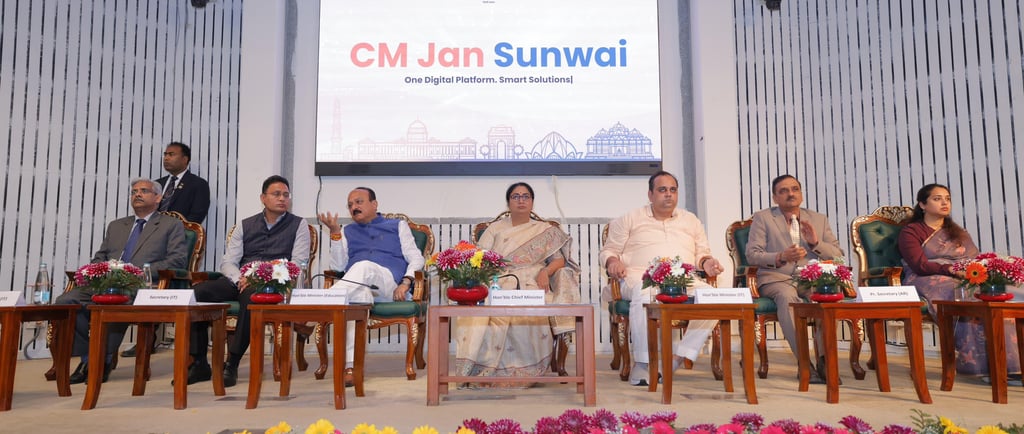
Governance in India is entering a decisive phase where technology shapes the relationship between citizens and the state. The recent launch of the CM Jan Sunwai portal and integrated digital service platforms in Delhi signals a structural shift in how public institutions respond to people. The initiative reflects a deeper administrative philosophy: transparency, accountability, and accessibility must define public service delivery. In a country where grievance redressal often feels distant and procedural, this model brings the state closer to the citizen.
The CM Jan Sunwai portal creates a unified interface through which residents can register complaints via web, mobile application, call center, or physical submission. It introduces a three-tier redressal system and a unique ID-based tracking mechanism. SMS alerts inform complainants about every stage of action. Escalation triggers when delays occur. Such features reduce uncertainty and increase administrative responsibility. When people can monitor their complaints in real time, trust grows.
The integration of over 7,000 e-district services with Common Service Centres strengthens access for citizens who lack digital literacy or internet connectivity. By linking departments and enabling cross-agency coordination, the government reduces fragmentation. Instead of moving between offices, citizens now interact with a single digital gateway. This structural simplification represents governance reform, not just technological adoption.
The education-focused features deserve special recognition. Aadhaar-based verification, digital validation of certificates, and automated seat allocation in EWS, DG, and CWSN admissions reduce discretion and eliminate duplication. Families from economically weaker sections often struggle with documentation hurdles and opaque admission processes. A transparent digital platform ensures fairness and timeliness. It also promotes data integrity and administrative efficiency.
This model aligns with the broader vision of Digital India, which seeks to transform governance through infrastructure, inclusion, and innovation. However, what distinguishes this initiative is its emphasis on grievance redressal as a core governance function. Many digital platforms across India focus on service delivery, but fewer place structured accountability at the center of citizen engagement.
A comparison with other states reveals the distinct strengths of Delhi’s approach.
In Andhra Pradesh, the government operates the Spandana grievance redressal system. Spandana enables citizens to file complaints online and through village secretariats. The model emphasizes decentralization and local accountability. However, Delhi’s CM Jan Sunwai portal integrates a structured escalation matrix with automated alerts and digital tracking across multiple urban agencies. This unified urban governance interface suits a metropolitan context where agencies such as municipal corporations and development authorities often operate independently.
Rajasthan runs the Rajasthan Sampark portal, which offers online grievance filing and tracking. The platform provides transparency and status updates. Yet Delhi’s model combines grievance redressal with large-scale service integration and education-sector automation. The integration of EWS admissions into the grievance ecosystem adds a sectoral depth that extends beyond complaint registration.
Karnataka provides services through the Seva Sindhu portal. Seva Sindhu focuses primarily on service delivery and online applications across departments. It excels in digital application processing. Delhi’s initiative complements service delivery with active monitoring, escalation triggers, and performance tracking through the CM Pragati dashboard. This combination links citizen feedback directly with executive oversight.
Uttar Pradesh uses the Jansunwai portal for grievance redressal. The platform enables complaint filing and tracking, and it covers a wide range of departments. However, Delhi’s approach incorporates automated seat allocation in education, Aadhaar-based digital verification, and integration with asset management and monitoring systems. These additional features create a comprehensive governance architecture that extends beyond redressal into proactive reform.
Kerala’s e-governance ecosystem also demonstrates strong digital penetration, particularly in service access and local self-government portals. Kerala emphasizes participatory governance and digital literacy. Delhi’s model matches that inclusivity while introducing centralized escalation and executive monitoring mechanisms that ensure uniform compliance across agencies.
The broader lesson from this comparative landscape is clear: digital governance requires more than portals. It demands system design that connects complaints, service access, verification, and accountability. Delhi’s initiative integrates these components within a single administrative framework.
Another strength lies in its hybrid approach. Digital platforms operate alongside physical public hearings. This ensures that technology does not replace human interface but strengthens it. In a diverse urban population, inclusivity remains essential. A grievance portal must serve both tech-savvy users and citizens who prefer face-to-face interaction. This balance reflects thoughtful governance.
Moreover, the asset management portal and project monitoring systems enhance transparency in infrastructure and public expenditure. When the government tracks projects in real time and links feedback loops to citizen complaints, policy implementation gains coherence. Digital dashboards can identify delays, resource gaps, and bottlenecks before they escalate into systemic failures.
Such initiatives also align with India’s federal innovation ecosystem. States increasingly function as laboratories of governance reform. Each state adapts digital tools according to administrative scale and demographic profile. Delhi’s metropolitan character demands coordination among urban bodies, development authorities, and specialized agencies. The CM Jan Sunwai portal responds to that complexity with integration and structured escalation.
Critically, technology alone does not guarantee accountability. Political will, administrative training, and data governance frameworks determine success. However, when leadership commits to measurable timelines, digital tracking, and transparent communication, reform becomes sustainable. Delhi’s model demonstrates that governance innovation thrives when technology aligns with institutional reform.
India stands at a pivotal moment where citizens expect responsiveness and efficiency. Digital grievance systems, service integration, and sector-specific automation represent more than modernization. They reflect a new social contract in which the state listens, responds, and communicates with clarity.
The CM Jan Sunwai portal and associated platforms embody that shift. They strengthen transparency, reduce discretion, empower vulnerable communities, and create measurable accountability. In comparison with other state models, Delhi’s approach integrates grievance redressal with service delivery, sector reform, and executive monitoring in a cohesive structure.
As states continue to refine their digital governance strategies, collaborative learning and inter-state exchange can amplify impact. When governments adopt best practices from one another, India’s federal system transforms into a dynamic engine of reform. Technology then becomes not just a tool, but a bridge between aspiration and action, between citizens and the state.