
Union Budget 2026–27: A Strategic Push for Growth, Capacity, and Competitive India
Union Budget 2026–27 presents a strategic roadmap that links manufacturing strength, infrastructure expansion, human capacity, and institutional reform. The emphasis on productivity, competitiveness, and inclusion reflects an attempt to shape long-term economic outcomes rather than pursue short-term populism.
OPINIONUNION BUDGET (2026-27)
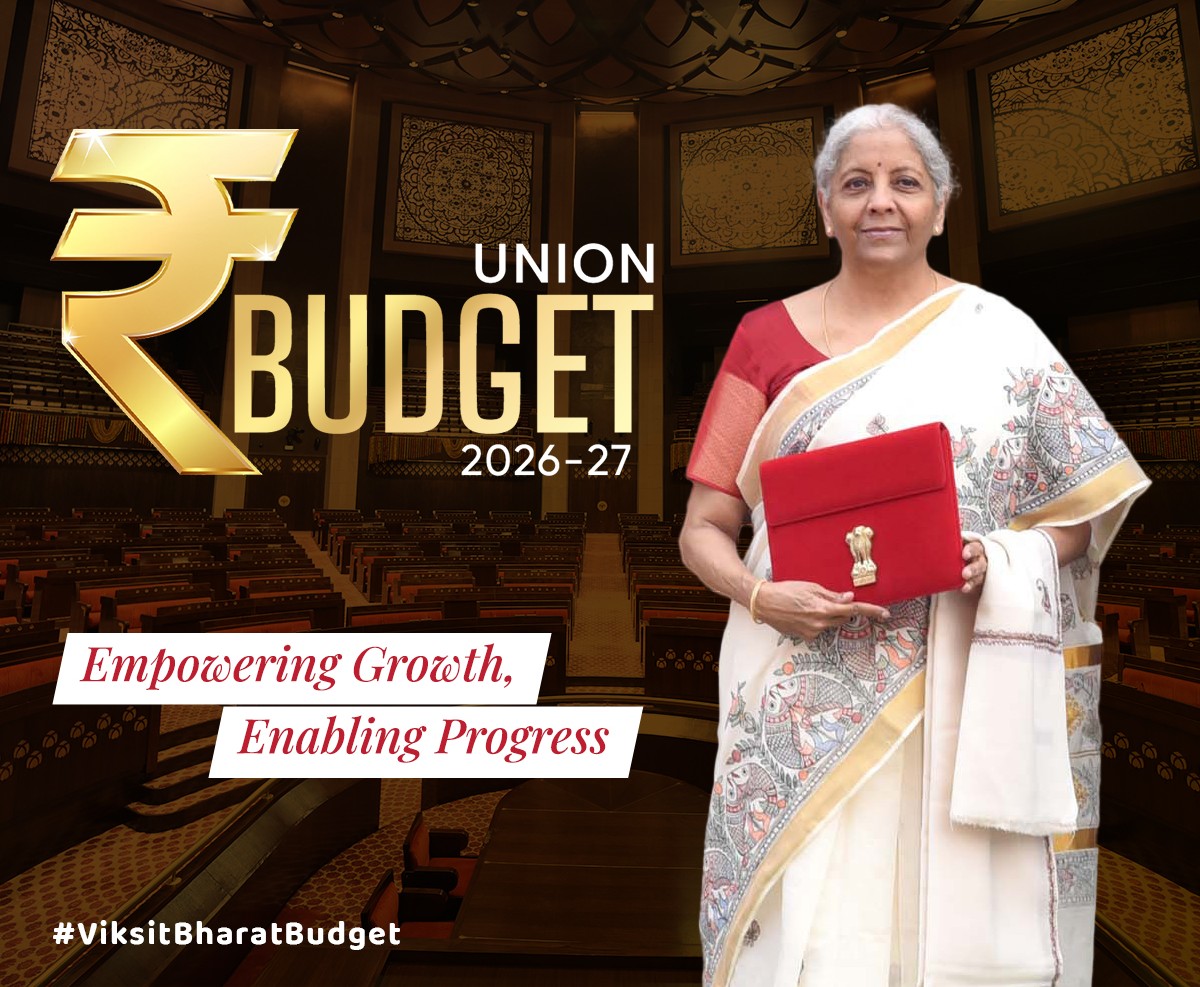
The Union Budget 2026–27 arrives at a moment when India faces a complex mix of global uncertainty and domestic aspiration. Sluggish global trade, geopolitical tensions, supply chain realignments, and climate pressures define the external environment. At the same time, India seeks faster growth, better jobs, stronger manufacturing, and wider social inclusion. Against this backdrop, the Budget articulates a clear strategic direction that places productivity, human capacity, and equitable access at the centre of economic policy.
The Budget rests on three guiding objectives: accelerating economic growth, fulfilling aspirations through human capital development, and ensuring equitable opportunities across regions and communities. This framework signals an attempt to move beyond incremental fiscal management and towards long-term structural transformation.
Manufacturing and Industrial Transformation
The Budget places manufacturing competitiveness at the core of the growth strategy. It prioritises seven strategic and frontier sectors such as biopharma, semiconductors, electronics, rare earths, chemicals, capital goods, and textiles. This approach reflects an intent to reduce import dependence, strengthen domestic value chains, and improve India’s position in global manufacturing networks.
The Biopharma SHAKTI initiative allocates ₹10,000 crore over five years to support advanced manufacturing, research, and scale in pharmaceuticals and life sciences. This measure aims to position India as a reliable global supplier of critical medicines and biologics while generating high-skilled employment.
The India Semiconductor Mission 2.0 expands its scope to include equipment, materials, and domestic intellectual property design. Through this expansion, the Budget attempts to address the full semiconductor ecosystem rather than limit intervention to fabrication alone. Such an approach increases resilience and improves long-term viability.
Electronics manufacturing receives another boost through a higher allocation of ₹40,000 crore for the Electronics Components Scheme. The focus on components rather than assembly indicates a conscious effort to deepen domestic value addition.
The Budget also proposes dedicated Rare Earth Corridors and new chemical parks. These initiatives recognise the strategic importance of critical minerals and chemicals in modern manufacturing. Support for capital goods ecosystems further strengthens industrial self-reliance and export capacity.
In addition, the government introduces a scheme to modernise 200 legacy industrial clusters. This move acknowledges the role of traditional industrial regions while attempting to upgrade technology, productivity, and competitiveness.
Support for MSMEs and Entrepreneurship
Small and medium enterprises occupy a central place in the Budget’s industrial vision. The allocation of ₹10,000 crore to an SME Growth Fund and an additional ₹2,000 crore to the Self-Reliant India Fund aims to ease access to long-term capital. These measures seek to address a persistent constraint that limits MSME expansion.
The Budget also emphasises skill partnerships with professional institutions to enhance managerial and technical capacity within small firms. Through this approach, the government links credit support with capability development, which strengthens sustainability and competitiveness.
Infrastructure as a Growth Multiplier
Public capital expenditure rises to ₹12.2 lakh crore, reinforcing the infrastructure-led growth model. Roads, railways, logistics, and urban infrastructure receive continued priority, as public investment crowds in private investment and creates employment.
The Budget announces new dedicated freight corridors and 20 national waterways. These initiatives aim to reduce logistics costs and improve supply chain efficiency. The Coastal Cargo Promotion Scheme further encourages a shift towards maritime and inland water transport, which reduces congestion, costs, and emissions over time.
Support for seaplane operations adds a new dimension to regional connectivity and tourism. By improving access to remote and coastal areas, the Budget attempts to integrate regional development with economic opportunity.
Energy Transition and Urban Transformation
The Budget acknowledges climate and sustainability challenges through a ₹20,000 crore allocation for Carbon Capture, Utilisation, and Storage over five years. This initiative supports cleaner industrial processes and aligns economic growth with environmental responsibility.
Urban growth receives renewed attention through the creation of City Economic Regions. Each region receives ₹5,000 crore over five years, linked to performance, competition, and reform incentives. This model encourages cities to function as engines of growth while improving governance, infrastructure, and service delivery.
Human Capital and Social Inclusion
Human capacity forms the second major pillar of the Budget. The government proposes a High-Powered Standing Committee to strengthen employment generation in the service sector. This initiative recognises the dominant role of services in job creation and export earnings.
The Budget also expands training for health professionals, including the creation of 100,000 allied health professionals. New medical education hubs and stronger mental health infrastructure, including a second NIMHANS-level institution, signal greater attention to public health capacity.
Traditional systems of medicine also receive support through new All India Institutes of Ayurveda. These institutions aim to strengthen education, research, and integration within the health system.
The Divyangjan Kaushal Yojana introduces targeted skill pathways for persons with disabilities across emerging sectors. This measure reflects a broader understanding of inclusion that goes beyond income support and focuses on productive participation.
Tax and Compliance Reforms
The Budget announces the introduction of the New Income Tax Act, 2025, which takes effect from April 2026. The new law seeks to simplify language, reduce litigation, and improve compliance clarity for taxpayers.
Compliance reforms include staggered return timelines, lower TCS rates for education and tourism remittances, and simpler TDS provisions for labour-intensive sectors. These changes aim to reduce administrative burden and improve ease of compliance.
The Budget also promises a more respectful and trust-based approach towards honest taxpayers, particularly in dispute resolution. Such an approach signals a shift in taxpayer-administration relations.
On the indirect tax front, the government rationalises customs duties, expands exemptions for life-saving medicines, and provides incentives for electronic exports. These steps support affordability, competitiveness, and export growth.
Trade Facilitation and Ease of Doing Business
Customs modernisation continues through longer duty-deferral periods, extended validity of advance rulings, and deeper digital integration. These reforms reduce transaction time and cost, especially for exporters.
Export facilitation measures include duty-free treatment for fishing activities in the Exclusive Economic Zone and removal of export value caps for courier shipments. Such steps benefit small exporters and integrate micro enterprises into global trade.
Fiscal Strategy and Macroeconomic Outlook
The Budget estimates total expenditure at ₹53.5 lakh crore and targets a fiscal deficit of 4.3 percent of GDP. A gradual reduction in the debt-to-GDP ratio reflects a commitment to fiscal consolidation without sacrificing growth momentum.
This balance between investment-led growth and fiscal discipline defines the macroeconomic stance of the Budget.
Conclusion
Union Budget 2026–27 presents a strategic roadmap that links manufacturing strength, infrastructure expansion, human capacity, and institutional reform. The emphasis on productivity, competitiveness, and inclusion reflects an attempt to shape long-term economic outcomes rather than pursue short-term populism.
The true test of the Budget lies in implementation capacity, coordination across institutions, and responsiveness to ground realities. If execution aligns with intent, the Budget can push India closer to a high-growth, inclusive, and resilient economic trajectory.